- शनिबार, असोज १७ २०८३
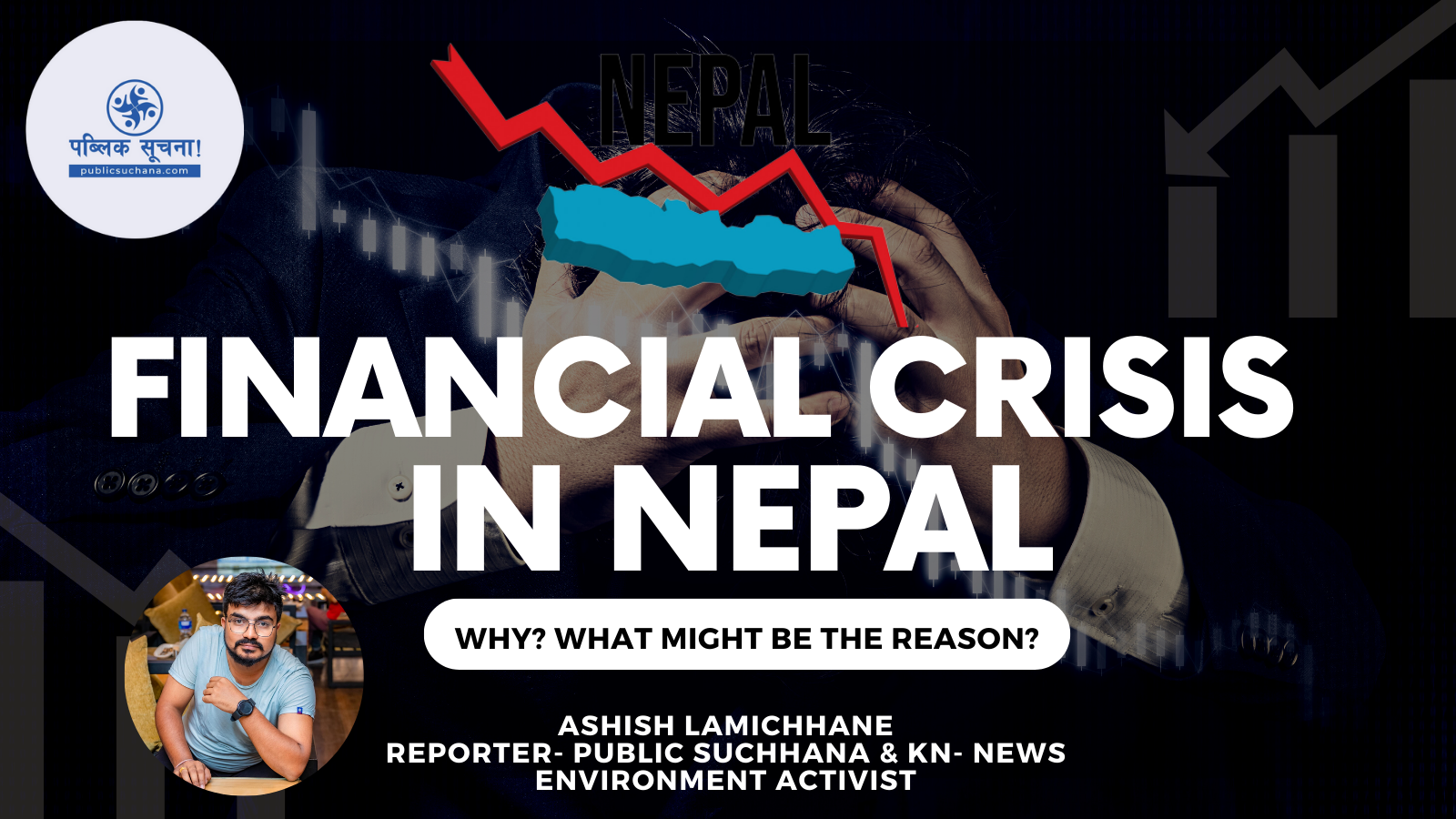
July-5,2023, Wednesday (Ashish Lamichhane): In recent times, Nepal has been grappling with a severe financial crisis that has had a profound impact on its economy and the lives of its citizens. The country’s financial stability has been shaken, prompting a closer examination of the underlying factors that have contributed to this crisis. Public debt during the last five years has nearly doubled from NPR. 1.43 trillion in 2018-19 to NRs. 2.013 trillion in 2021-22. In 2022-23, the share of external debt to the country’s Gross Domestic Product (GDP) reached nearly 42 percent.In comparison to a growth of 8.84% in FY 2021/22, the NSO forecasted that the mining sector would only grow by a modest 1.11% in FY 2022/23. Construction spending, which increased by 7.08% in the previous fiscal year, is predicted to decline by 2.62% this year.
This article aims to shed light on some key reasons behind the financial turmoil in Nepal.

1. Political Instability:
One significant factor behind Nepal’s financial crisis is the persistent political instability the country has faced in recent years. Frequent changes in governments, political infighting, and a lack of long-term economic policies have created an environment of uncertainty. This has hampered economic growth, deterred foreign investment, and undermined the confidence of both domestic and international investors.
2. Weak Governance and Corruption:
Nepal has struggled with issues of weak governance and corruption, which have further exacerbated the financial crisis. Instances of corruption, bribery, and embezzlement within government institutions have hindered effective financial management. The diversion of public funds for personal gain has resulted in a loss of public trust and weakened the overall financial system.
3. Trade Imbalance and Dependence:
Nepal heavily relies on imports, and its trade deficit continues to widen. The country’s over-dependence on imported goods, including essential commodities and fuel, has put immense pressure on its foreign reserves. Insufficient domestic production, coupled with a lack of competitive industries, has created an unfavorable trade balance, leading to a strain on the economy and contributing to the financial crisis.
4. Inadequate Infrastructure Development:
Inadequate infrastructure, including unreliable power supply, inadequate transportation networks, and limited access to finance, has hindered economic growth and investment opportunities. The lack of proper infrastructure has deterred both domestic and foreign investors, limiting the country’s capacity for economic expansion and exacerbating the financial crisis.
5. Natural Disasters:
Nepal is highly susceptible to natural disasters, including earthquakes, floods, and landslides. These events have not only caused substantial human and infrastructure losses but have also significantly impacted the economy. Rebuilding efforts following major disasters put a strain on the national budget and divert resources away from other critical sectors, exacerbating the financial crisis.
Potential measures could include an extension of the maturity of the central bank liquidity provided to banks and purchases of private debt securities in the secondary market in order to improve its liquidity and reduce the cost of funding of the real economy, thus helping its recovery.
The financial crisis in Nepal is a complex issue with multiple contributing factors. Political instability, weak governance, trade imbalances, inadequate infrastructure development, and the impact of natural disasters have all played a role in the current economic turmoil. Addressing these challenges requires a comprehensive and coordinated approach, including political stability, effective governance reforms, promotion of domestic industries, investment in infrastructure, and disaster preparedness. By addressing these underlying issues, Nepal can work towards stabilizing its financial situation and creating a path toward sustainable economic growth for the benefit of its citizens and future generations.
“Accelerating capital budget spending through focused investment planning, financial management, and project readiness will help spur Nepal’s economic growth over the years.” Agriculture growth will likely moderate to 2.0% in FY2023, down from 2.3% in FY2022.
© 2026 All right reserved to publicsuchana.com | Site By : SobizTrend